

As a supplier of water sensitive paper stickers, I've received numerous inquiries from customers operating in high - altitude areas. They're curious about whether our products can function effectively in such challenging environments. In this blog, I'll delve into the science behind water sensitive paper stickers and explore their performance in high - altitude regions.
Understanding Water Sensitive Paper Stickers
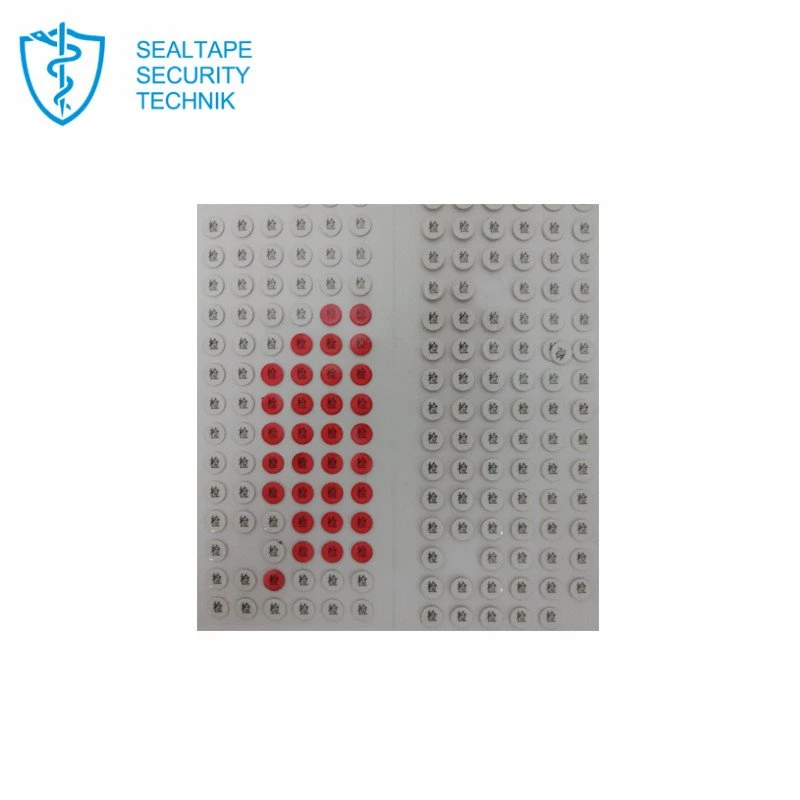
Water sensitive paper stickers are innovative products designed to detect the presence of moisture. They are widely used in various industries, including electronics, packaging, and logistics, to indicate if a product has been exposed to water. When these stickers come into contact with water, they undergo a visible color change, providing a clear and irreversible indication of water exposure.
We offer a range of water sensitive paper stickers, such as the Irreversible Water Sensitive Paper Label Sheet, Water Sensitive Selfadhesive Security Label Paper, and Water Damage Indicator Sensitive Paper Stickers. These products are made from special paper materials impregnated with chemical compounds that react with water molecules.
The Science Behind Water Sensitivity
The key to the functionality of water sensitive paper stickers lies in the chemical composition of the paper. Most water sensitive papers contain dyes or indicators that change color when moisture alters their molecular structure. For example, some stickers use pH - sensitive dyes. When water, which often contains dissolved carbon dioxide and other substances that can affect pH, comes into contact with the sticker, the pH of the dye - impregnated area changes, leading to a color shift.
Another common mechanism involves the reaction of certain salts with water. These salts are designed to absorb water and form hydrates, which have different optical properties compared to their anhydrous forms. As a result, the appearance of the sticker changes, signaling water exposure.
High - Altitude Environment Factors
High - altitude areas present a unique set of environmental conditions that can potentially affect the performance of water sensitive paper stickers. The main factors include lower air pressure, lower temperatures, and lower humidity levels.

Lower Air Pressure
At high altitudes, the air pressure is significantly lower than at sea level. This can have two implications for water sensitive paper stickers. Firstly, the lower air pressure may cause the evaporation rate of water to increase. If a sticker gets wet, the water may evaporate more quickly, which could potentially reduce the time available for the color - change reaction to occur or for the color change to be clearly visible.
However, it's important to note that the design of our water sensitive paper stickers takes into account the rapid evaporation scenario. The chemical reactions are formulated to be fast - acting, ensuring that the color change occurs even if the water is present for a short period. Additionally, the dyes and indicators used have a high sensitivity, allowing them to detect even small amounts of water.
Lower Temperatures
Cold temperatures are a characteristic of high - altitude regions. Low temperatures can slow down chemical reactions, including the ones responsible for the color change in water sensitive paper stickers. The kinetic energy of the molecules involved in the reaction is reduced, leading to a slower reaction rate.
To address this issue, our research and development team has optimized the chemical formulations of our stickers. We have developed formulations that are more effective at lower temperatures. These formulations contain additives that can enhance the reactivity of the dyes and indicators even in cold conditions. As a result, our water sensitive paper stickers can still provide reliable water detection in high - altitude, cold environments.
Lower Humidity Levels
High - altitude areas generally have lower humidity levels. While this might seem like it would reduce the likelihood of water exposure, it's important to remember that water can still come from other sources, such as condensation or direct contact with liquids. Our water sensitive paper stickers are designed to detect water regardless of the humidity level in the surrounding environment. They are highly sensitive to water molecules, and even a small amount of water from condensation on a product's surface can trigger the color - change reaction.
Field Tests and User Feedback
We have conducted extensive field tests in high - altitude areas to evaluate the performance of our water sensitive paper stickers. These tests involved placing our stickers on various products and monitoring them under real - world conditions. The results have been very encouraging.
In many cases, the stickers were able to accurately detect water exposure, even in the challenging high - altitude environment. Users in high - altitude regions have also provided positive feedback. They have reported that the stickers are reliable and easy to use. The clear and irreversible color change allows them to quickly determine if a product has been exposed to water, which is crucial for quality control and product safety.
Conclusion
Based on the scientific understanding of water sensitive paper stickers, the analysis of high - altitude environmental factors, and the results of field tests and user feedback, we can conclude that our water sensitive paper stickers work effectively in high - altitude areas.
The unique chemical formulations and design features of our products enable them to overcome the challenges posed by lower air pressure, lower temperatures, and lower humidity levels. Whether you are in the electronics industry, packaging business, or logistics sector operating in high - altitude regions, our water sensitive paper stickers can provide you with a reliable solution for water detection.
If you are interested in our water sensitive paper stickers and would like to discuss your specific requirements, please reach out to us. We are more than happy to provide you with detailed product information and collaborate with you on your water - detection needs.
References
- Atkins, P. W., & de Paula, J. (2014). Physical Chemistry. Oxford University Press.
- Chang, R. (2010). Chemistry. McGraw - Hill Education.