
Hey there! As a supplier of security caution tape, I often get asked a bunch of questions. One of the most common ones is, "Does security caution tape leave residue when removed?" Well, let's dig into this topic and find out the answers.
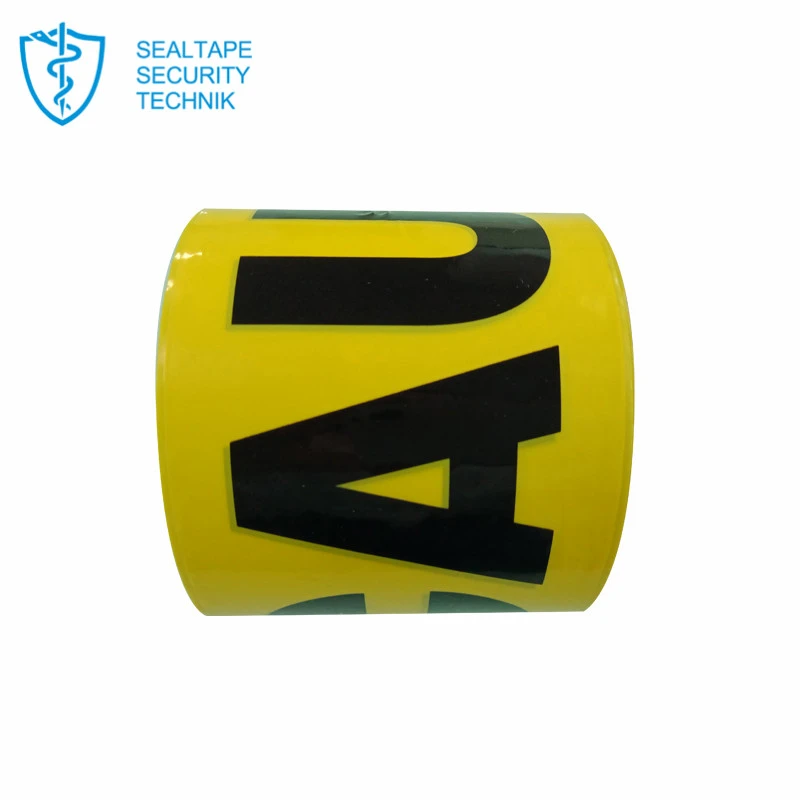
First off, let's talk about what security caution tape is all about. Security caution tape is super useful in a ton of situations. It's used to mark off areas that are dangerous, under construction, or just off - limits. You've probably seen it in action at a construction site, a crime scene, or even at a store where they're doing some repairs. We offer a variety of security caution tapes, like the Yellow Black Danger Warning Security Caution Tape, Red And White Construction Security Caution Tape, Logo Barrier Flag Security Caution Tape, Logo Design Fragile Warning Security Caution Tape, and PVC Roll Warning Safety Barricade Caution Tape.

Now, back to the main question: residue. Whether security caution tape leaves residue when removed depends on several factors.
Quality of the Tape
The quality of the tape plays a huge role. High - quality tapes are usually designed with adhesives that are strong enough to stick well but also easy to remove without leaving a mess. When we produce our security caution tapes, we focus on using top - notch materials and adhesives. Our tapes are made to adhere firmly to surfaces, but at the same time, when it's time to take them off, they won't leave behind that annoying sticky residue. For example, the Yellow Black Danger Warning Security Caution Tape is crafted with a special adhesive formula that ensures a clean removal.
On the other hand, low - quality tapes often have adhesives that are too aggressive. These adhesives might bond too tightly with the surface, which means that when you try to take the tape off, you're left with a sticky mess. Some cheap tapes on the market use adhesives that are not well - formulated, and they can be a real headache to clean up.
Surface Type
The surface where the security caution tape is applied also matters a lot. Different surfaces react differently to the tape's adhesive.
- Smooth Surfaces: On smooth surfaces like glass, metal, or plastic, high - quality security caution tape usually comes off cleanly. The adhesive can bond well without seeping into the pores of the surface. For instance, if you use our PVC Roll Warning Safety Barricade Caution Tape on a glass window for a temporary warning, you can expect it to peel off easily. However, if the surface is dirty or has some grease on it, the tape might not adhere properly or could leave residue when removed. So, it's always a good idea to clean the surface before applying the tape.
- Rough Surfaces: Rough surfaces like concrete, brick, or textured wood are a bit more challenging. The pores and irregularities in these surfaces can cause the tape's adhesive to seep in deeper. When you try to remove the tape, some of the adhesive might get stuck in those pores. But even on rough surfaces, our high - quality tapes are designed to perform as well as possible. For example, the Red And White Construction Security Caution Tape is made with an adhesive that can be removed with a bit of effort while minimizing the residue.
Duration of Application
How long the tape is left on the surface also affects residue. If you only leave the security caution tape on for a short period, say a few hours or a couple of days, there's a good chance it will come off cleanly. But if the tape is left on for weeks or even months, the adhesive has more time to bond with the surface. This can increase the likelihood of residue being left behind. For short - term applications, our Logo Design Fragile Warning Security Caution Tape is a great choice as it can be removed quickly and cleanly.
Removing the Tape Properly
The way you remove the tape is crucial. Pulling the tape off too quickly at a sharp angle can cause the adhesive to break apart and leave residue. Instead, it's better to pull the tape off slowly and at a low angle, close to the surface. This gives the adhesive a chance to separate from the surface gradually. Also, using heat can sometimes help. You can use a hair dryer on a low - heat setting to warm up the adhesive, which makes it more flexible and easier to remove.
Common Myths about Residue
There are a few myths floating around about security caution tape residue. One myth is that all tapes will leave residue. That's just not true! As I've mentioned, high - quality tapes from a reliable supplier like us are designed to be residue - free. Another myth is that you have to use harsh chemicals to remove the residue. While there are some commercial adhesive removers out there, you don't always need them. For minor residue on smooth surfaces, you can often use simple household items like rubbing alcohol or vinegar to clean it up.
In conclusion, security caution tape doesn't have to leave residue when removed, especially if you choose high - quality tapes and follow the proper application and removal procedures. Our range of security caution tapes, such as the Yellow Black Danger Warning Security Caution Tape, Red And White Construction Security Caution Tape, and others, are made to meet your needs while keeping residue at bay.
If you're in the market for security caution tape, whether it's for construction, safety warnings, or something else, we're here for you. We offer top - notch products with excellent adhesive properties and a commitment to customer satisfaction. Don't hesitate to reach out to us for more information or to start a procurement discussion. We look forward to working with you!
References
- "Adhesive Technology Handbook", Smith, J., 2020.
- "Surface Science and Adhesion", Johnson, R., 2021.