

As a supplier of Total Transfer Security Labels, I've had the privilege of witnessing their widespread adoption across various industries. These labels serve a critical purpose, providing a visible and often irreversible indication of tampering. However, like any technology or product, they come with their own set of limitations. Understanding these limitations is essential for both us as suppliers and our clients who rely on these labels for security.
1. Physical Vulnerabilities
One of the primary limitations of Total Transfer Security Labels lies in their physical nature. These labels are applied to surfaces, and any physical damage to the label or the surface it's applied to can compromise its integrity. For instance, scratches, abrasions, or impacts can cause the label to peel, tear, or lose its adhesive properties. In high - stress environments where products are subject to rough handling during transportation or storage, the labels may become damaged without any actual tampering taking place.
Moreover, extreme environmental conditions can also pose a threat. High temperatures, humidity, or exposure to chemicals can degrade the label material over time. For example, in industrial settings where there are high levels of moisture or corrosive substances, the adhesive may weaken, and the label may start to lift. This can lead to false alarms, where the label appears to have been tampered with when in fact it's just due to environmental factors.
Another aspect of physical vulnerability is the possibility of skilled individuals attempting to remove or manipulate the label without leaving obvious signs of tampering. Some sophisticated techniques can be used to heat the label gently, soften the adhesive, and then carefully peel it off. Once removed, the label can be re - applied in a way that may not be immediately noticeable. This is a significant concern, especially in industries where counterfeiting and unauthorized access are major issues, such as the pharmaceutical or electronics sectors.
2. Limited Visibility in Some Applications
Total Transfer Security Labels are designed to be visible, but there are situations where their visibility may be limited. In some products or packaging designs, the label may be placed in an area that is not easily accessible or visible to the end - user. For example, in complex electronic devices, the label may be located in a hard - to - reach internal compartment. This means that even if the label has been tampered with, the end - user may not notice it until it's too late.
In addition, in certain industries where products are stored in large quantities or in dark environments, such as warehouses, the labels may not be easily distinguishable. The low - light conditions can make it difficult to spot the signs of tampering. For example, a security label on a pallet of goods in a dimly lit warehouse may require close inspection, which is not always feasible during the normal course of business operations.
3. False Sense of Security
The presence of a Total Transfer Security Label can sometimes give a false sense of security to companies and consumers. Just because a label is intact does not necessarily mean that the product has not been tampered with. As mentioned earlier, there are techniques that can be used to manipulate the label without leaving obvious signs. Also, in some cases, the focus on the label may cause companies to overlook other potential security vulnerabilities in their products or supply chain.
For example, a company may rely solely on the security label to protect its products during transit, but neglect to implement other security measures such as tamper - evident packaging seals or electronic tracking devices. If a product is tampered with at a stage where the label is not compromised (e.g., through a cleverly engineered entry point), the company may believe the product is still secure when it's actually been breached.
4. Compatibility Issues
Total Transfer Security Labels need to be compatible with the surfaces they are applied to. If the surface is not smooth, clean, or has a specific texture, the label may not adhere properly. For example, applying a label to a rough or porous surface can result in air bubbles being trapped under the label, which can weaken the adhesive and make the label more prone to peeling.
In addition, different types of materials may react differently with the label's adhesive. Some plastics, for instance, may have additives or surface treatments that can interfere with the bonding process. This can lead to premature label failure, even if the product has not been tampered with.
5. Cost - Benefit Considerations
The cost of using Total Transfer Security Labels can be a limiting factor for some businesses. The labels themselves, along with the application equipment and any associated training, can add up to a significant expense. For small and medium - sized enterprises, this cost may be prohibitive, especially if they are operating on tight budgets.
Moreover, the cost - benefit analysis needs to take into account the potential losses that could occur if the product is tampered with. If the risk of tampering is relatively low, it may not be cost - effective to invest in high - end security labels. However, making this determination accurately can be challenging, as the potential for tampering and the associated consequences can be difficult to quantify.
Products We Offer
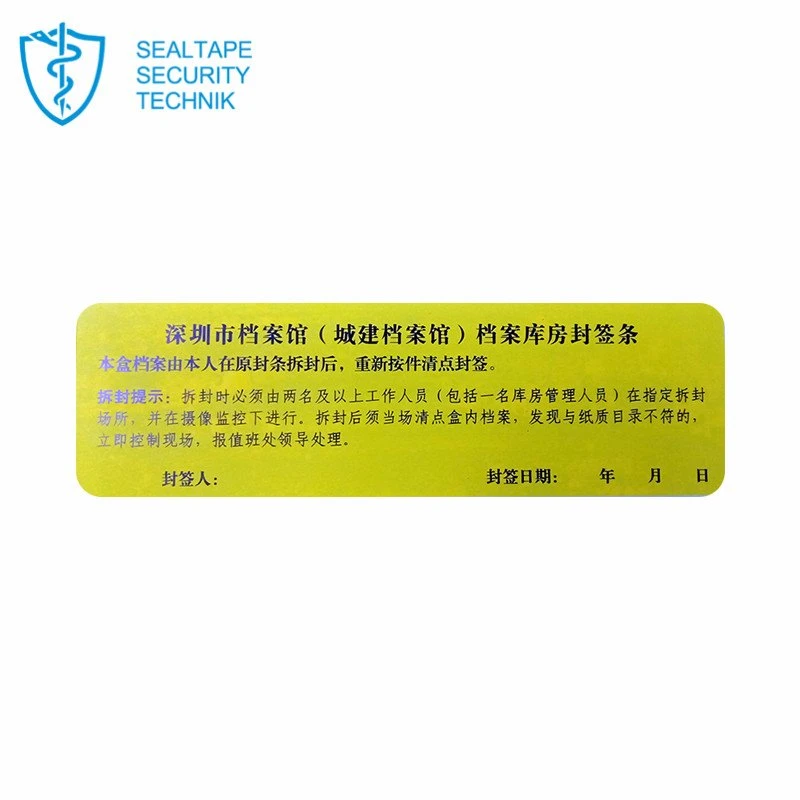
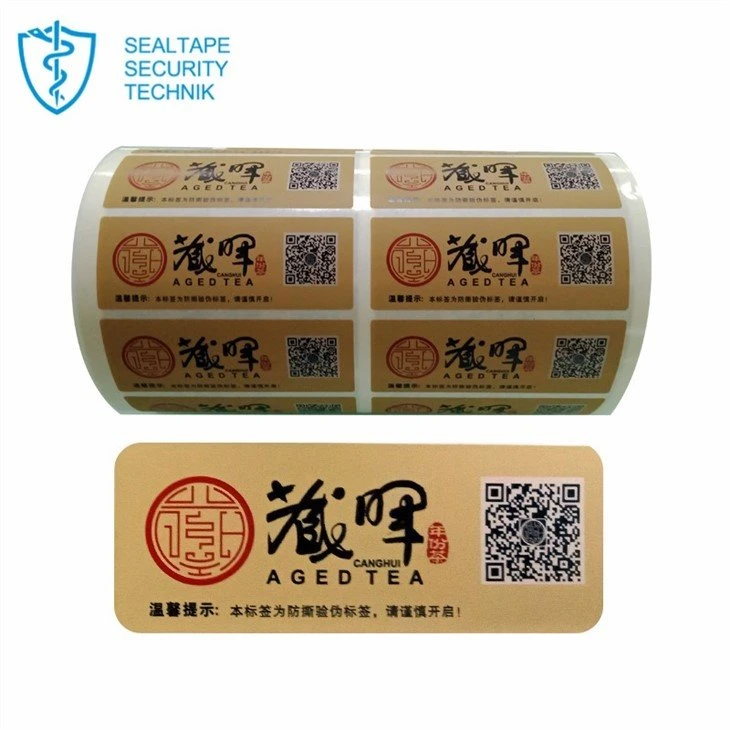
Despite these limitations, our Roll Thermal Total Transfer Security Labels offer several advantages. They are designed to be durable and resistant to common environmental factors, reducing the risk of false alarms. Our Tamper Proof Total Transfer Security Labels provide a high level of protection against unauthorized access, making it difficult for tamperers to go unnoticed. And our Warranty OPEN VOID Total Transfer Security Sticker Label is specifically designed to indicate when a product has been opened, which can be crucial for warranty - related issues.
Conclusion
In conclusion, while Total Transfer Security Labels are a valuable tool for enhancing product security, they are not without their limitations. Physical vulnerabilities, limited visibility, the potential for a false sense of security, compatibility issues, and cost - benefit considerations all need to be taken into account. As a supplier, we are committed to continuously improving our products to overcome these limitations and provide the best possible security solutions for our clients.
If you are interested in learning more about our Total Transfer Security Labels or would like to discuss your specific security needs, we encourage you to contact us for a detailed consultation. Together, we can find the most suitable security label solutions for your products and business.
References
- "Security Labeling in the Pharmaceutical Industry," Journal of Pharmaceutical Sciences
- "Effect of Environmental Factors on Adhesive Labels," Adhesives Research Journal
- "Cost - Benefit Analysis of Anti - Tampering Measures," International Journal of Business Economics